AI Workflow & Automation: The Career You Didn't Know You Needed
A new kind of career is already taking shape
What if one of the most useful careers of the next few years is not "prompt engineer," but the person who knows how to make work actually flow?
That is where AI workflow and automation come in. Most people hear "AI" and think about chatbots, image tools, or viral apps. But companies need something more practical: people who can connect tools, simplify messy processes, remove repetitive tasks, and help teams save time without creating confusion. That is why this path matters right now. If you enjoy solving problems, organizing systems, and using digital tools in a smart way, this field may fit you better than you think. In this article, you will see what this career looks like, why demand is growing, and how you can start building the right skills.
It is less about robots and more about real work
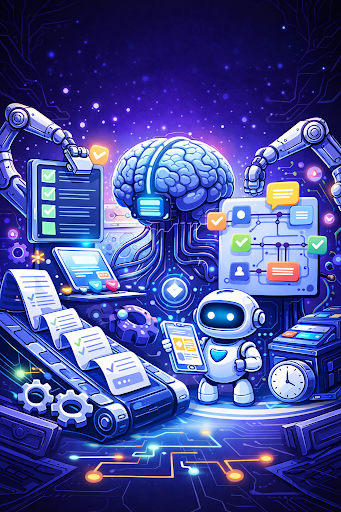
An AI workflow and automation role is not about building some sci-fi machine that replaces everyone. It is about improving how work gets done. Imagine a company that receives customer requests by email, logs them in a system, writes first replies, routes urgent cases to the right person, and tracks follow-up. If all of that happens manually, the process becomes slow, repetitive, and easy to mess up. Someone working in automation can redesign that flow using AI tools, no-code platforms, and clear logic. The goal is simple: less wasted time, fewer repetitive steps, and better results.
That is why this job feels so concrete. You are not just "using AI." You are fixing bottlenecks, connecting apps, and helping people work better. In real life, that can mean automating reports, organizing leads, supporting HR processes, improving customer service, or helping a team avoid copying the same information into five different tools every day.
Why companies are paying attention now
This field is growing because businesses are moving from curiosity to real use. Microsoft reported in its 2025 Work Trend Index that 82% of leaders say this is a pivotal year to rethink key parts of strategy and operations, and 67% say they are considering hiring for new AI-related roles in the next 12 to 18 months. That tells you something important: companies do not just want AI tools sitting in a dashboard. They want people who know how to turn those tools into useful systems.
The World Economic Forum also points in the same direction. In its Future of Jobs Report 2025, it says AI and big data are the fastest-growing skills area through 2030, along with technology literacy and related digital capabilities. So even if the exact job title changes from one company to another, the core need is clear: employers want people who can understand digital tools and improve workflows with them.
What the job can actually look like
One good thing about this career is that it does not always come with one fixed title. You might see roles like automation specialist, AI operations assistant, workflow designer, business systems coordinator, no-code builder, or digital transformation support. The title changes, but the logic stays similar. You look at how a team works, find where time gets lost, and build a smoother process using the right tools.
For someone just starting out, that is interesting because this path connects with jobs that already exist in marketing, sales, customer support, administration, HR, project management, and operations. You do not always need to become a hardcore developer. In many cases, companies need someone who understands business needs, tool logic, and clean execution. If you are the type of person who naturally thinks, "Why are we still doing this manually?" you already have the right instinct.
The skills that matter most
To grow in this field, you need a mix of technical skills and human skills. On the technical side, it helps to understand automation platforms, AI assistants, spreadsheets, databases, APIs, and process logic. You should know how information moves from one step to another and where mistakes usually happen. On the human side, you need communication, curiosity, and structure. A workflow only works if real people can use it.
This is also why the job is not just for coders. Many strong professionals in this space know how to ask the right questions, map a process clearly, and test a solution in a way that actually helps a team. They understand that a smart system is not the most complex one. It is the one people adopt because it saves time and makes sense.
Why this path can be a great choice early on
AI workflow and automation is easier to imagine than many other careers because it solves problems you already know. Think about sending the same message again and again, moving data by hand, forgetting follow-ups, or wasting time switching between platforms. Now imagine being the person who cleans that up.
That is one reason this path can be powerful for beginners. You can start small and still build real value. You might automate lead tracking, meeting summaries, onboarding steps, or internal reminders. These may sound simple, but in a company, simple improvements can save hours every week. McKinsey's 2025 reporting on AI in the workplace also shows that while nearly all companies invest in AI, only 1% believe they are at maturity. In other words, there is still a huge gap between having access to AI and knowing how to use it well. That gap creates opportunity for people who can make AI practical.
This career is also about trust and judgment
One mistake people make is thinking automation means pressing a button and letting the machine do everything. In reality, good AI automation needs judgment. You need to know what should be automated, what should stay human, and how to keep things accurate, ethical, and useful. A badly designed workflow can create more problems than it solves. A well-designed one can make a team faster, calmer, and more effective.
That is why employers do not just need tool users. They need people who can think clearly, spot risks, and improve a process without making it harder for everyone else. Deloitte's recent work on AI and the future of work highlights that roles, teams, and management structures are changing as organizations integrate AI-powered agents and new operating models. That shift increases the value of people who can connect tools, people, and processes in a sensible way.
Learning now can give you a head start
The best way to enter this field is to learn by doing. Start understanding how workflows are built, how tools connect, and how companies think about efficiency. Learn the basics of automation logic, AI-assisted tasks, digital organization, and process mapping. You do not need to master everything at once. What matters most is building a practical mindset: see the problem, simplify the steps, test the system, improve the result.
That kind of learning can help you across many sectors, not just in tech. Almost every industry now wants people who can work smarter with digital tools. So even if your future role changes, these skills stay useful. They give you versatility, which is a huge advantage when the job market keeps evolving.
Turning a new trend into a real opportunity
AI workflow and automation may sound like a niche topic at first, but it is quickly becoming one of the most useful career directions for people entering the modern workplace. It sits at the meeting point of AI, organization, business needs, and real-world efficiency. It is practical, forward-looking, and valuable in companies that want results, not just hype.
Ready to Build a Career in AI Workflow & Automation?
At Etudis.us, our program helps you move beyond curiosity and start building real skills for this fast-changing field. You learn how to understand workflows, use the right tools, think in a structured way, and turn automation into something concrete and professional. If you want a career path that feels modern, relevant, and full of potential, the Etudis.us AI workflow and automation program can help you get started with confidence.
Discover the AI Workflow & Automation Program →